The right book can teach you more SEO than a hundred scattered blog posts — but only the right one. Here are the best SEO books, ranked, from a link-builder's view, with what each is genuinely good for so you don't waste money on the wrong tome.
One free pick aside (mine), most of these are paid published books — I've described each by what it's genuinely known for so you can pick the right one rather than buying all ten.
🔥 Want a personal steer (and hands-on help later)? Book a free call with Goldie Agency.
The 10 Best SEO Books
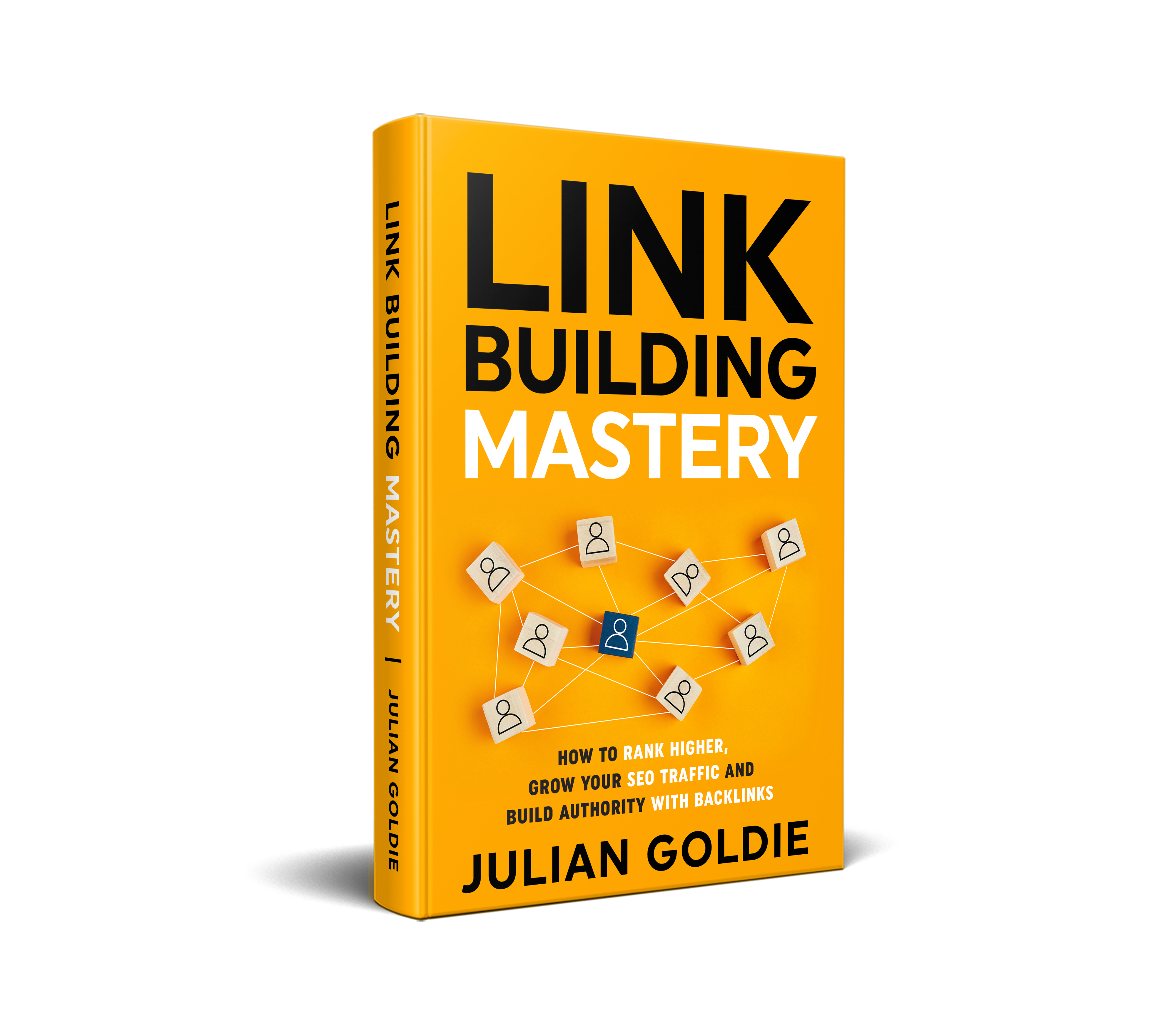
1. Link Building Mastery — Julian Goldie (free)
My own free book, focused on the part most SEO books skip lightly — actually earning relevant links and authority. It's genuinely free and practical rather than a 1,000-page tome. Grab it here, and for a steer book a free call.
2. The Art of SEO — Enge, Spencer & Stricchiola
The comprehensive classic — often called the SEO 'bible'. Dense and thorough, it covers everything; the go-to reference when you want depth across the whole field.
3. SEO (annual edition) — Adam Clarke
A popular, regularly-updated practical guide that keeps pace with changes. A solid, accessible pick for beginners-to-intermediate who want current, actionable advice.
4. Product-Led SEO — Eli Schwartz
A strategy book about building SEO into a product and business rather than chasing tactics — strong on thinking, less on step-by-step.
5. 3 Months to No.1 — Will Coombe
An action-oriented, no-nonsense guide aimed at small businesses wanting practical steps rather than theory.
6. The Ultimate Guide to Link Building — Ward & French
A book dedicated entirely to link building — naturally close to my heart, and a deeper treatment of the topic most general SEO books rush.
7. SEO for Dummies — Peter Kent
A genuinely beginner-friendly grounding in the fundamentals, in the familiar approachable 'Dummies' style.
8. They Ask, You Answer — Marcus Sheridan
More content-marketing than pure SEO, but its 'answer your buyers' questions' approach drives the kind of content that ranks.
9. SEO Like I'm 5 — Matthew Capala
A short, simple introduction for absolute beginners who want the core ideas without the heft.
10. Content Chemistry — Andy Crestodina
A practical content-marketing handbook with plenty that's directly useful for SEO content.
How To Choose The Right SEO Book
Match the book to where you are. Absolute beginner? Start with a friendly fundamentals book, not the 1,000-page reference. Want depth on a specific area like links? Get the dedicated book. The comprehensive classics are references to dip into, not read cover-to-cover. Buying the wrong-level book is the main way people waste money here.
A Book Is A Start, Not The Whole Job
Reading is the easy part; applying it to a real site is where the learning sticks. Whatever book you pick, act on one idea from each chapter on your own site and watch Search Console. A book you apply beats five you merely finished — and it's how you turn reading into rankings.
FAQ
What's the best SEO book for beginners?
A friendly fundamentals book (like SEO for Dummies or a simple intro). Save the comprehensive classics for reference later.
Are SEO books out of date fast?
The fundamentals don't age; specific tactics do. Favour regularly-updated guides for tactics and timeless ones for principles.
Want hands-on help?
My free Link Building Mastery book teaches the DIY path; to hand it off, book a call.
What Even The Best Books Underteach
Here's an honest gap to plan around: even excellent general SEO books tend to undercook link building. They'll cover on-page and technical thoroughly, then give links a chapter and move on — yet links are where competitive niches are decided and where most budgets go. So however good your chosen book, treat links as a topic you'll need to go deeper on separately, with a dedicated book or genuinely useful free material.
That's partly why I wrote my own free book the way I did: to give the links side the depth most general SEO books skip. Pair a strong comprehensive book for breadth with focused link-building material for depth, and you'll have a far more complete and competitive education than any single 'beginner SEO book' provides on its own. The breadth tells you what to do; the link depth is what actually wins.
How To Read An SEO Book Properly
Reading an SEO book passively, cover to cover, is the slow way to learn. The fast way is to read actively: after each chapter, implement one concrete thing on your own site and watch what happens in Search Console over the following weeks. A book you apply chapter by chapter teaches you ten times more than one you race through and shelve.
This also helps you separate timeless principles from dated tactics, which every book mixes. When you test an idea on a real site, you find out fast whether it still works in your niche today, regardless of when the book was written. So treat each book as a source of experiments, not commandments. That habit turns reading into genuine, tested skill — and it's exactly what separates people who 'read a lot of SEO books' and stay stuck from those who actually improve.
Don't Buy The Whole Shelf
A common mistake is buying five SEO books at once in a burst of motivation, then reading none of them properly. Don't. Books are cheap, but your attention isn't. Pick one at your level, read it actively, apply it, and only buy the next when you've hit a specific gap it fills. One book properly absorbed beats a shelf of half-read ones every time.
This is especially true because SEO knowledge compounds through application, not accumulation. The person who reads one good book and applies every chapter will outrank the person who owns ten and applied none. So resist the collector's urge, choose deliberately based on your level and your current bottleneck, and give each book the active reading and real-world application it deserves. That discipline turns a modest book budget into a genuine education.
Related Guides
Explore more in our guides to the best free SEO courses, the best SEO certifications, and the best AI SEO tools.
The Bottom Line
The best SEO books teach you to think — pick one at your level, apply it, and to get hands-on help, book a call.