If you've Googled "how to build backlinks" in 2026, you've already read the same article 40 times.
Guest post. Skyscraper. HARO. Broken link.
Every list. Every blog. Every guru.
The problem isn't that those tactics don't work. The problem is that nobody tells you the system that holds them together.
This article does. I'll show you the exact 5-step link-building system I run at Goldie Agency — the one that's placed 50,000+ backlinks across 300+ clients and built three of my own properties past six figures.
No fluff. No "secrets nobody talks about." Just the system.
The 1 thing every working link-building system has in common
Before I walk through the system, you need to understand one principle.
The internet doesn't link to people. The internet links to assets.
That's it. That's the whole game.
When somebody writes an article and decides to link out, they don't link to "a friend's website" or "someone they met on Twitter." They link to a thing — a statistic, a study, a tool, a chart, a page that's worth the click.
Most link-building advice teaches you tactics for getting links to your existing pages. That's backwards.
The best link builders in the world start with "what asset should I build that the internet will link to?" — and they engineer outreach around it.
This single reframe is the difference between sending 500 cold emails for 3 links and sending 50 cold emails for 25 links.
Step 1 — Pick the asset before you pick the keyword
Most SEOs pick a keyword, write a post, and try to build links to it.
Reverse the order.
Look at what's already getting linked in your niche. Use Ahrefs or Semrush, run a "Best by links" report on your top 3 competitors, and look at the patterns.
You'll see one of four asset types repeated everywhere:
- Original data studies ("We analysed 1,200 X and here's what we found")
- Free tools (calculators, generators, templates)
- Industry statistics roundups ("57 X statistics in 2026")
- Definitive long-form guides ("The ultimate guide to X")
Pick one. Decide what version you'll build. Don't pick the keyword yet — pick the asset format first.
This is what I mean by "asset-first." You're not building a page hoping for links. You're building a page that's engineered, by format, to attract them.
Step 2 — Make the asset 10x better than the current best
Now you pick the angle.
Look at the top 3 pages currently ranking for your target asset. Don't try to write something different. Write something better in a specific, demonstrable way.
If they have 50 stats, your version has 120.
If they last updated in 2023, your version is dated this quarter.
If they have no original data, your version includes a 500-person survey.
If they have a static page, your version includes an interactive tool.
The bar is: anyone linking to the current best could justify switching to yours without raising eyebrows. That's a 10x asset.
Step 3 — Find every site that links to the current best
This is where the math kicks in.
Take the URL of each of those top 3 ranking pages. Drop them in Ahrefs' Site Explorer one by one. Pull the "Backlinks" report.
For each one, export every unique referring domain. Dedupe across the three. You now have a list of every website that's already linked to "this kind of asset" within the last few years.
That's your outreach list.
It is by definition the highest-converting outreach list you can build, because every site on it has already proven it's the kind of site that links to the kind of asset you just made.
For a competitive niche, that list will be 200-2,000 domains. Don't be intimidated by the size — you're going to filter it down.
Step 4 — Filter for quality and reachability
Two filters here.
Quality filter. Remove domains under DR30 (low-trust), and remove sites that haven't published anything in the last 6 months (dead). You typically lose 40-60% of the list at this step. That's fine — quality over quantity always wins in link building.
Reachability filter. For every remaining domain, find the right person to contact — usually the author of a recent post in the relevant category. Tools like Hunter.io, Apollo, or RocketReach will pull their email. If you can't find a real human to email, skip the domain.
You should end up with 100-500 high-quality, reachable contacts. This is your active outreach list.
Step 5 — Run the 3-email outreach sequence
Here's where most people lose the game. They write one email, send it once, and wonder why nobody replies.
You need three emails, sent on a sequence.
Email 1 (day 1) — A specific compliment about a recent post they wrote, a one-line value swap ("just published a 2026 version with 120 fresh stats — I think it'd fit naturally as a citation in your X post"), and a low-friction CTA. 90 words max.
Email 2 (day 4) — A bump. Just "wanted to make sure this didn't get buried — happy to send the asset directly if useful." 20 words.
Email 3 (day 10) — A "different angle" pitch. If they didn't bite on the resource swap, offer a guest post or expert quote instead. 60 words.
Across the three emails, you should see a 12-18% reply rate from a clean, well-targeted list. About half of those replies will turn into placements.
So 100 contacts at 15% reply rate at 50% conversion = ~7-8 placements per campaign.
Run two campaigns a month and you're landing 15+ DR-relevant backlinks every 30 days — without ever buying a link, building a PBN, or chasing a guest post broker.
What this looks like in practice
Let me walk you through a recent campaign.
Asset: "57 link-building statistics in 2026" — sourced from a 1,200-person SEO survey we ran in March.
Target list: 412 referring domains from the top 3 ranking "link-building statistics" pages.
After quality + reachability filters: 187 active contacts.
Outreach window: 3 weeks.
Replies: 31 (16.6%).
Placements: 18 (9.6% of total list).
Average DR of placements: 64.
Time invested: ~14 hours total across writing, list building, outreach, and follow-up.
That's a real campaign. Those are real numbers. Anyone telling you their average is wildly higher is either lying or not counting properly.
The compounding effect
Here's what changes when you run this system every month.
In month 1, you place 15 backlinks. Your domain authority moves a notch. A few of your secondary pages start ranking.
In month 3, you've placed 45 backlinks total. Two of your money pages move into the top 10. Organic traffic is up 30-40%.
In month 6, you've placed 90 backlinks and your competitors are noticing. You start landing links you didn't even pitch — because people now reference your stat pages organically.
By month 12, you're playing on a different field. Your asset pages are the ones competitors are trying to copy. Your link velocity is high enough that you're outranking older sites in your niche.
This is the moat. This is why link building still matters more than any other SEO lever in 2026.
What's next
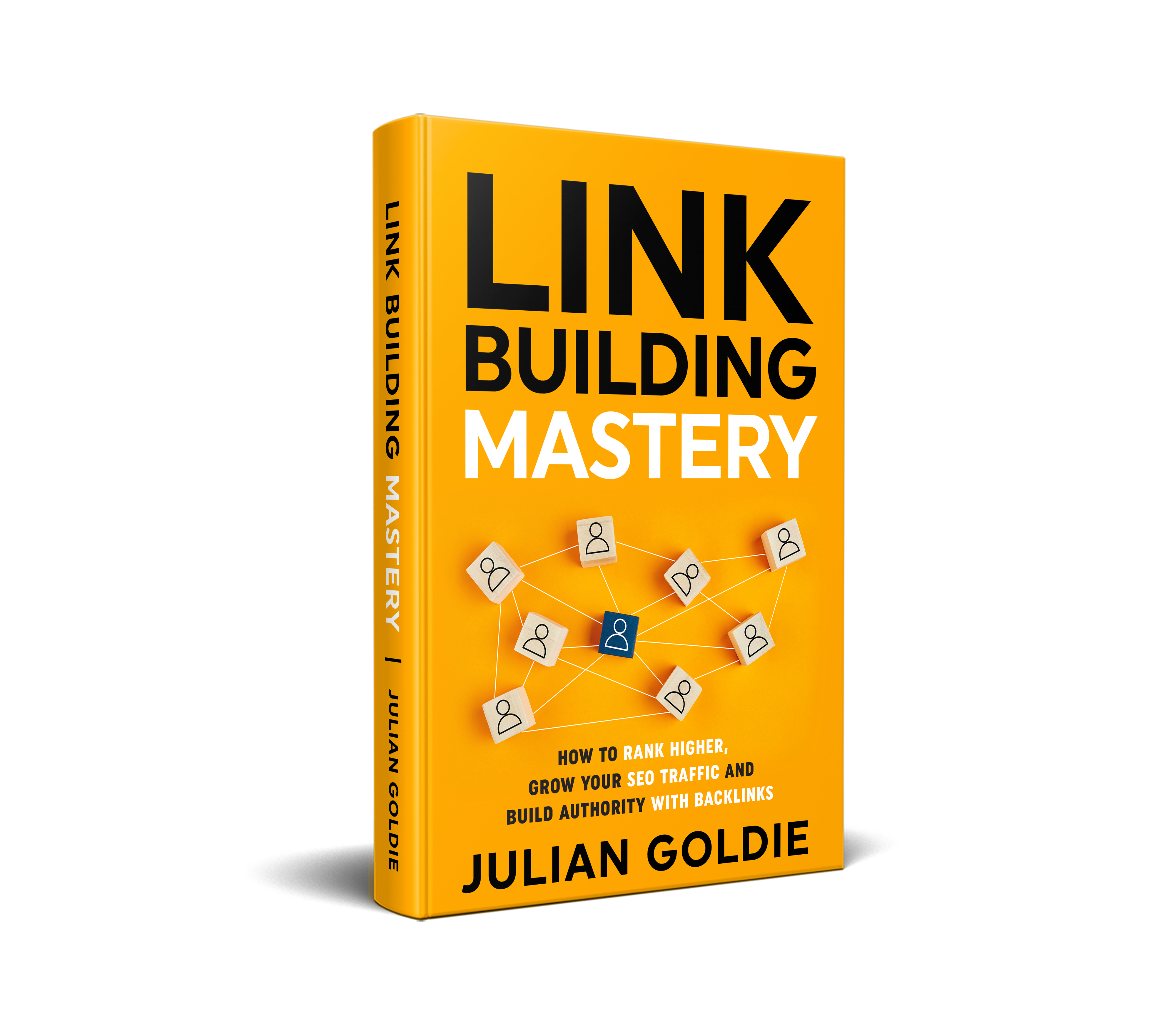
The system I just walked you through is one chapter of the Link Building Mastery book.
The full book covers:
- The asset-first framework in 22 pages of detail
- Outreach scripts that hit 18% reply rates (with the actual email templates)
- Digital PR for landing DR80+ placements (Forbes, Entrepreneur, etc.)
- HARO and expert-quote campaigns done properly
- AI-assisted prospecting at scale
- The 3-link-a-week minimum effective dose system
- Selling link building to clients at $5K-$25K/month retainers
It's 200+ pages. It's the actual playbook from a 7-figure SEO agency.
And it's completely free.