If you've been pitched on "SaaS link building" by an agency, you've probably heard the same three suggestions.
"We'll do guest posts on Medium and HackerNoon."
"We'll target your competitors' backlinks."
"We'll do HARO."
These aren't wrong. They're just incomplete. They're the tactics any agency would use for any client — and they ignore the specific structural advantages B2B SaaS has for earning links.
This post walks through the framework I use at Goldie Agency specifically for SaaS clients. It's the same framework that took a project-management SaaS from 4,200 monthly organic visitors to 148,000 in 11 months — including 187 DR70+ backlinks, 4 Forbes features, and 64% of pipeline now coming from organic.
I'll break down the 5 asset types, why each one works specifically for SaaS, and how to sequence them.
Why generic link building underperforms for SaaS
Here's the problem.
Most link-building agencies were built around affiliate sites and content-driven brands. The playbooks assume your product is the article, and your link target is a piece of content.
SaaS doesn't work that way.
A SaaS company's most valuable pages are product pages, integration pages, alternative-to pages, and BOFU comparison pages. These pages are commercially loaded — they convert visitors into trials or paying customers.
But they're also the hardest pages to link to. Nobody wants to link to a product page. Nobody wants to link to "ProductX vs CompetitorY." It looks like an ad.
So generic outreach campaigns push links to top-of-funnel blog posts that don't convert. Your DA climbs. Your blog traffic grows. Your trial signups don't move.
The SaaS-specific framework solves this by building linkable assets that funnel attention toward the commercial pages.
That's the whole game.
The 5 SaaS link-building assets that compound
Here are the asset types that work for SaaS, ranked by how well they convert links into commercial impact.
Asset 1 — Original data studies (the heaviest hitter)
Run a survey of 500-2000 people in your ICP. Publish the data with interpretation. Tag every interesting finding with a quotable statistic.
A good data study earns 30-100+ backlinks over 12 months because every article in your category eventually needs a citation. Once you're the source, you're the source for years.
Example: at Goldie Agency we ran a 1,200-person SEO survey for a client. The resulting "57 SEO statistics" page now ranks #2 for the target keyword and has earned 64 referring domains in 11 months — almost zero outreach after launch.
Cost: $2K-$15K depending on survey platform and sample size.
Time: 3-6 weeks from survey design to publication.
Asset 2 — Free tools and calculators
A free, single-purpose tool tied to your category. Mortgage calculator for a financial SaaS. Domain authority checker for an SEO tool. Time-zone converter for a scheduling tool.
These are the highest-link-velocity asset in SaaS because every "best free X tools" listicle eventually adds yours. The tools you build don't need to be flagship product features — they just need to be useful in the same problem space.
Example: a client built a free word-counter tool for a writing SaaS. It pulls 80,000+ monthly organic visitors and has earned 540 referring domains over 3 years.
Cost: $5K-$30K to build a quality tool (development + design).
Time: 4-12 weeks depending on complexity.
Asset 3 — Statistics roundups
The format every category eventually needs. Find an existing "X statistics" page in your niche, build a better one with more stats, more recent dates, and a clear citation format.
These pages earn links passively because writers reference them as easy citation sources. They're also dead simple to build — you don't have to run original research, just curate well.
Example: a "social media statistics" page we built for an SMM client earned 89 referring domains in 9 months. Roughly 60% were unprompted citations after the page started ranking.
Cost: 8-20 hours of editorial time.
Time: 1-3 weeks.
Asset 4 — Industry trend reports
Annual or quarterly. "State of X in 2026." Survey your customers, layer in third-party data, and publish a downloadable PDF report with a long-form web summary.
Trend reports become the citation for the next 12 months in your category. They're particularly powerful because they double as a lead magnet — capture an email for the PDF download, then nurture into a trial.
Example: HubSpot's "State of Marketing" report earns thousands of links every year because it's the most-cited source in marketing journalism.
Cost: $5K-$50K depending on production quality.
Time: 6-12 weeks.
Asset 5 — Definitive long-form guides
Specifically: definitive guides on the commercial keyword you actually want to rank for.
This is where SaaS link building diverges from content marketing. A "Best B2B CRM software" guide isn't BOFU — it's a linkable asset that ranks AND captures intent. You're building the page that both earns links and converts trials.
The trick is to make it genuinely better than the SaaS-list-of-the-month pages everyone else writes. Original screenshots. Real product breakdowns. Up-to-date pricing. Honest pros and cons (yes, including for competitors).
Example: a "best A/B testing tools" guide we published for a client earned 47 referring domains in 8 months and now ranks #1 for the head term, driving 60+ trial signups per month from a single page.
Cost: 30-80 hours of editorial time.
Time: 3-6 weeks.
The sequencing matters
Here's the order I use for new SaaS clients.
Month 1-2: Build 2 statistics roundups. Fast wins. They're cheap, they rank in 60-90 days, they start earning passive citations within month 4-5.
Month 2-4: Run 1 original data study. Higher investment but it becomes your "anchor asset" — the page that gets cited for years.
Month 4-6: Build 1 free tool. The longest build cycle but the highest long-term link velocity. Once it ranks, it never stops earning.
Month 6-9: Publish 2-3 definitive commercial guides on your highest-intent keywords. These are where the commercial impact shows up.
Month 9-12: Launch the annual trend report. Now you have an asset that re-fires once per year, every year.
By month 12, you've published 6-8 linkable assets across 4 different formats. Each one is earning passive links. Your link velocity is high enough to outrank competitors who only have outreach-acquired links.
This is the moat.
How to outreach the SaaS way
Once you have an asset, outreach is straightforward. But there are SaaS-specific moves worth knowing.
Move 1 — Partner outreach first. Every SaaS has integration partners, customers, and resellers. They're all DR40+ sites that will link to a relevant asset. Email them before you email cold. Conversion rate: 30-50% on warm outreach vs 10-15% on cold.
Move 2 — Customer logo backchannels. If your customer is a recognisable brand, they have a blog. Their content team is always looking for citations. Pitch your data study to your customer's content lead. Conversion rate: 40-60%.
Move 3 — Podcast appearances on adjacent SaaS shows. Every SaaS podcast wants founder guests. Pitching yourself to 30 podcasts a year yields 8-15 placements — and every show page includes a link in the show notes. Bonus: podcast links are exceptionally easy to convert to trial signups because the listener has just heard you talk for 45 minutes.
Move 4 — VC and investor blog backchannels. If you're VC-backed, every fund in your cap table has a blog and a content team. Pitch them your data study as a guest post. These domains are typically DR70+ and your fund will help you land the placement.
Use these four before you cold-email a single stranger.
What this looks like at scale
A B2B SaaS client running this system for 12 months will typically:
- Publish 6-10 linkable assets across the 5 categories above
- Earn 200-400 referring domains across all assets
- Move 8-15 commercial keywords into the top 10
- Lift organic traffic 3-10x depending on starting point
- Drive 30-60% of new trial signups from organic by end of year
That's the bar. Anyone telling you they can deliver more in less time is either oversimplifying or fabricating numbers.
It's also why the work has to compound. A 3-month engagement won't get you there. A 12-month engagement just barely starts to.
What's next
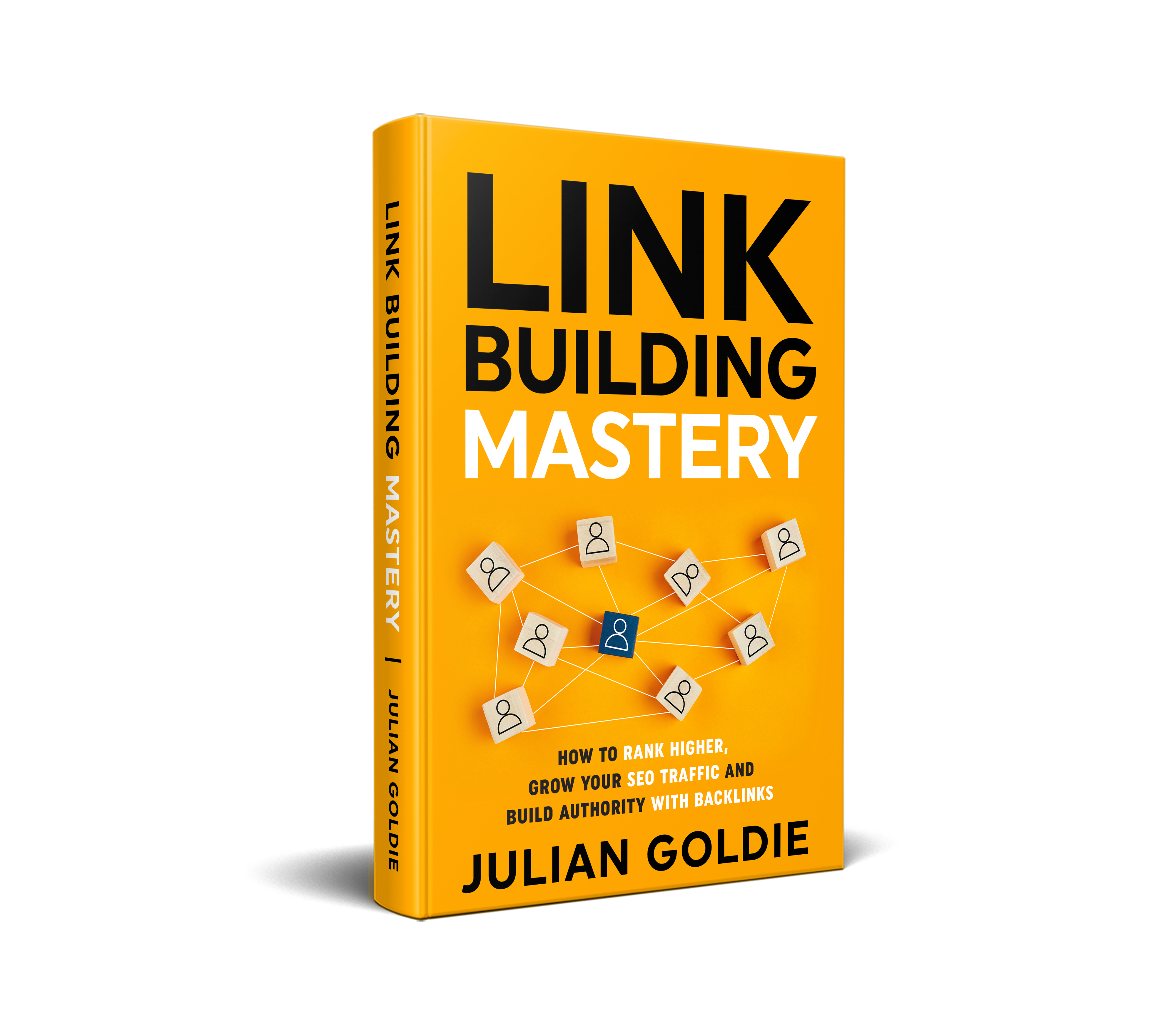
If you're running SaaS SEO and want the full playbook, the free Link Building Mastery book has three chapters dedicated to:
- Chapter 5: Digital PR for SaaS (Forbes, Entrepreneur, etc.)
- Chapter 8: AI-assisted asset production at scale
- Chapter 12: Selling SaaS link building to your CEO / board
Drop your email below and I'll send the whole book.
Or — if you want done-for-you SaaS link building from my agency, book a strategy session here. It's 30 minutes with me directly, no sales team.